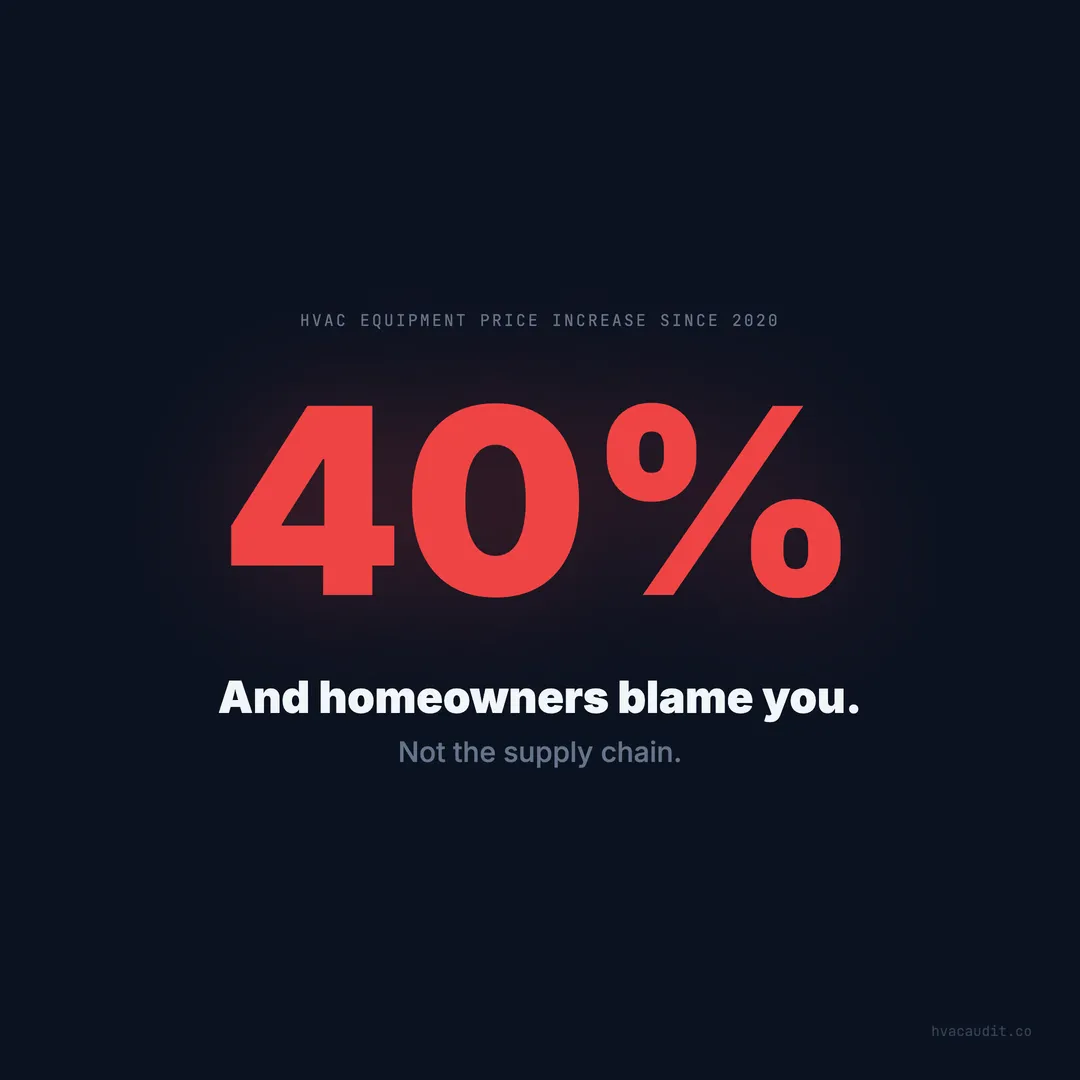
HVAC Equipment Prices Up 40% Since 2020 — and Homeowners Blame You
R-454B refrigerant costs jumped from $345 to $2,000+. Equipment prices are up 40%. Tariffs added 15-30%. But homeowners think you're the one overcharging. Here's how to handle the pricing conversation.
A homeowner calls for a quote on a new AC system. You price it at $8,200 — which is your cost plus a reasonable margin. She pauses. “My neighbor got the same system installed three years ago for $5,800. Why is yours so much more?”
You explain supply chain issues, refrigerant transitions, and tariffs. She hears “excuses.” She calls two more contractors, gets similar quotes, and eventually buys — but she leaves a 3-star review mentioning the price.
HVAC equipment prices have increased approximately 40% since 2020. The homeowner isn’t wrong that it costs more. She’s wrong about who’s responsible. But she doesn’t know that — because nobody told her.
What’s actually driving the price increases
The 40% increase isn’t one thing. It’s a stack of compounding cost pressures that hit the HVAC industry simultaneously.
Refrigerant transition. The EPA’s phasedown of R-410A in favor of R-454B has created massive cost spikes. R-454B refrigerant costs jumped from $345 to over $2,000 per unit in some markets. New equipment designed for R-454B costs 15–25% more than the R-410A systems it replaces. Contractors can’t absorb that — it goes directly into the customer’s price.
Tariffs. Steel and aluminum tariffs have added 15–30% to equipment costs depending on the manufacturer and where components are sourced. The 2025 tariff expansions hit HVAC particularly hard because compressors, coils, and sheet metal are all affected.
Supply chain disruption. Lead times that were 2–3 weeks pre-COVID stretched to 8–16 weeks during 2021–2023 and haven’t fully recovered. Manufacturers raised prices to manage demand, and those prices haven’t come back down even as supply stabilized.
Labor costs. The technician shortage pushed wages up 15–20% industry-wide. Higher tech wages mean higher installation costs, which get passed to the homeowner.
| Cost driver | Impact on final price | Timeline |
|---|---|---|
| R-454B refrigerant transition | +15–25% | 2023–ongoing |
| Steel/aluminum tariffs | +15–30% | 2025–ongoing |
| Equipment manufacturer increases | +20–30% | 2020–ongoing |
| Labor cost increases | +15–20% | 2021–ongoing |
| Supply chain surcharges | +5–10% | 2020–2024 |
Shipments of residential HVAC equipment dropped approximately 20% year-over-year as the combination of higher prices and higher interest rates reduced demand. Homeowners are deferring replacements, which means contractors are fighting harder for fewer jobs.
Homeowners don’t know any of this
The homeowner comparing your $8,200 quote to their neighbor’s $5,800 installation from 2023 doesn’t know about refrigerant transitions or tariff policy. They know one number: the price is higher. And they assume the difference is your margin.
77% of homeowners cite pricing transparency as a top concern when hiring a contractor. When they feel like the price isn’t explained, they don’t investigate — they distrust. That distrust shows up in three ways:
-
They get more quotes. A homeowner who might have called two contractors now calls four or five, looking for someone who can match the old price. Nobody can, but the process costs you time and reduces close rates.
-
They defer the purchase. Instead of replacing a failing system, they opt for another repair — which delays the sale and may result in an emergency replacement (at a competitor) when the system finally dies.
-
They leave lower reviews. Even when they buy, the perception of overpaying creates review resentment. A 4-star review that says “good work but expensive” hurts more than no review at all.
The contractors winning the pricing conversation
The contractors handling price increases well aren’t apologizing. They’re educating — and they’re doing it before the homeowner gets sticker shock.
On the website. The top 5% of HVAC websites address pricing proactively. Pages titled “Why HVAC Costs More in 2026” or “Understanding Your AC Replacement Quote” explain the industry factors before the customer asks. This pre-frames the conversation so the in-home quote isn’t a surprise.
During the quote. Contractors who present 4+ pricing options close at 52% versus 43% for single-quote presenters. When the homeowner sees a good-better-best breakdown with monthly payment options, the top-line number becomes less intimidating.
Monthly payments. Showing a monthly payment instead of a lump sum increases close rates from 21% to 42%. “$8,200” triggers price resistance. “$89/month for 10 years at 0% for the first 18 months” triggers “I can afford that.” The system is the same. The framing changes everything.
In reviews. Smart contractors respond to price-related reviews with education: “Thanks for the feedback! Our pricing reflects the 2025 R-454B refrigerant requirements and current material costs. We always provide multiple options so homeowners can choose what fits their budget.” That response is public — every future customer reads it.
Your website should explain prices before your tech arrives
Most HVAC websites don’t mention pricing at all. 70% of homeowners skip contractors who hide pricing. But in an environment where prices have jumped 40%, simply listing ranges isn’t enough. You need context.
A pricing page that says “AC replacement: $6,000–$12,000” without explaining why triggers the same sticker shock as a verbal quote. A pricing page that says “AC replacement: $6,000–$12,000. Prices reflect 2025-2026 material costs including R-454B refrigerant requirements, current tariffs on steel and aluminum components, and certified installation labor” converts doubt into understanding.
When we audited 147 HVAC websites, only 31% showed any pricing. Of those, fewer than 10% provided context for their prices. The rest just listed numbers — which, in a 40%-higher-than-expected environment, creates more distrust than transparency.
Price increases aren’t the real threat — perception is
The contractors who will struggle aren’t the ones charging more. Everyone’s charging more. The ones who will struggle are the ones who let the homeowner discover the increase without context.
93% of homeowners check reviews before calling. If your reviews include multiple mentions of “expensive” or “overpriced” without your responses providing context, you’ve lost the pricing conversation before your tech arrives.
84% of homeowners use Google before selecting a contractor. If your Google Business Profile and website don’t address current pricing realities, you’re competing against contractors who do — and their explanation becomes the homeowner’s baseline.
The equipment price increase is real, permanent, and industry-wide. Your competitor’s prices went up too. The difference is whether the homeowner understands why — or whether they think you’re the one who’s gouging them.
The 40% increase is here to stay — adapt your messaging
R-454B isn’t going away. Tariffs aren’t shrinking. Labor costs aren’t declining. The contractors who adapt their messaging — on their website, in their quotes, and in their review responses — will close at the same rates they always did. The ones who don’t will watch close rates decline and blame the economy.
The homeowner isn’t your enemy. She just doesn’t know what R-454B is. Tell her — before your competitor does.
Keep reading
Want to know your score?
Drop your URL — full report in 48 hours.
We're on it.
Report in your inbox within 48 hours.